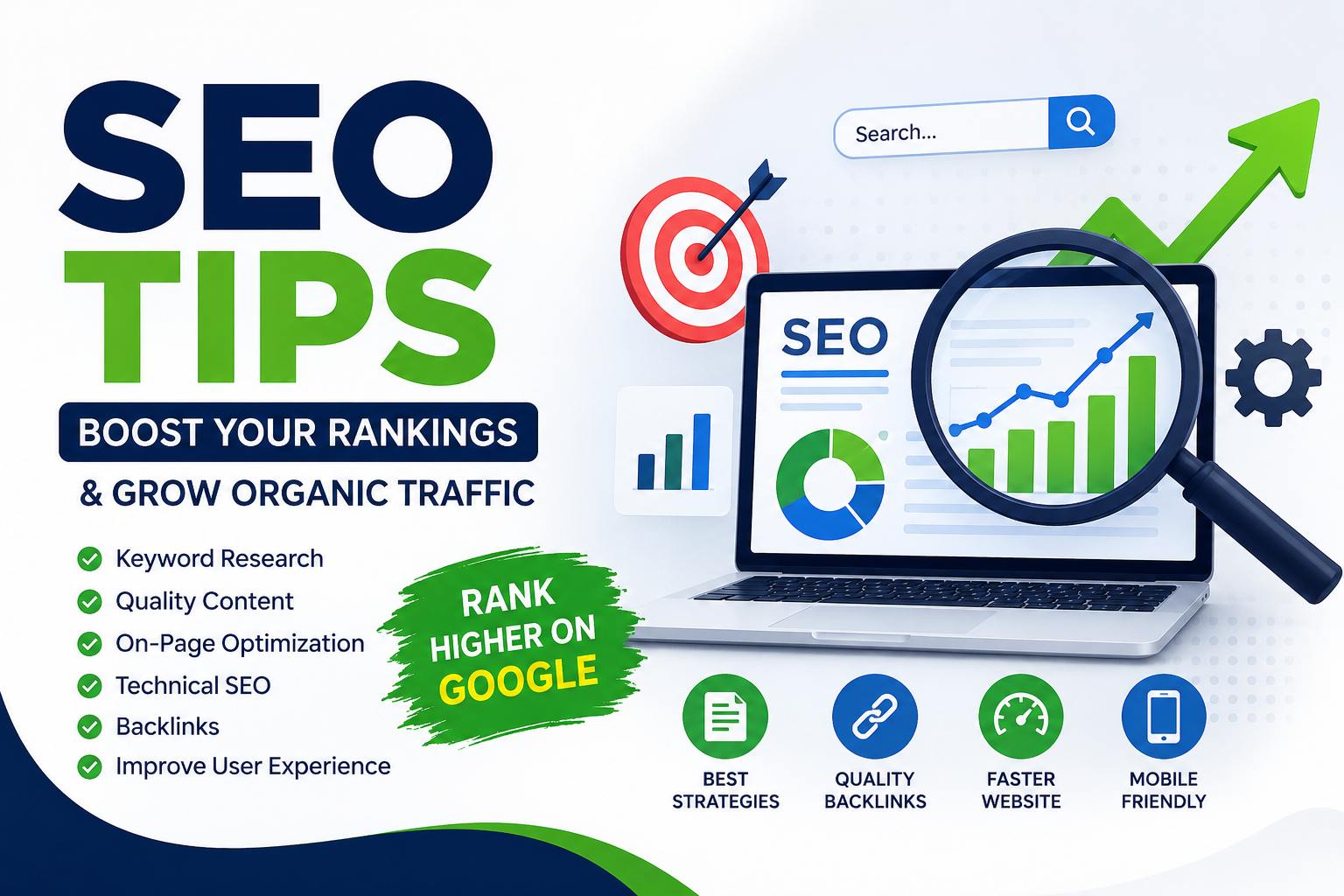
Search Engine Optimization (SEO) is one of the most effective digital marketing strategies for increasing website traffic, improving online visibility, and generating qualified leads. Whether you own a business website, an eCommerce store, or a personal blog, implementing the right SEO techniques can help your website rank higher on search engines like Google.
In this guide, we'll cover practical SEO tips that beginners and professionals can use to improve their search rankings and grow organic traffic.
SEO (Search Engine Optimization) is the process of optimizing a website so that search engines can understand its content and rank it higher in search results. The primary goal of SEO is to attract organic (non-paid) visitors who are actively searching for products, services, or information related to your business.
A strong SEO strategy offers several benefits:
Increases organic website traffic
Builds brand credibility and trust
Improves user experience
Generates high-quality leads
Provides long-term marketing results
Reduces dependence on paid advertising
Increases conversion rates
Keyword research is the foundation of every successful SEO strategy. Identify keywords your target audience searches for and naturally incorporate them into your content.
Useful keyword placement includes:
Page title
Meta description
Headings (H1, H2, H3)
First paragraph
URL
Image alt text
Throughout the content naturally
Focus on long-tail keywords because they often have lower competition and higher conversion rates.
Google rewards websites that provide valuable, original, and informative content.
Your content should:
Solve users' problems
Answer common questions
Be easy to read
Include examples and statistics
Be updated regularly
Avoid duplicate content
Remember: Content should be written for people first, then optimized for search engines.
Your title tag is one of the most important ranking factors.
Best practices:
Keep it under 60 characters
Include your primary keyword
Make it compelling enough to encourage clicks
Example:
SEO Tips for Beginners: 20 Proven Ways to Rank Higher on Google
Although meta descriptions are not a direct ranking factor, they significantly improve click-through rates.
A good meta description should:
Be 150–160 characters
Include the target keyword
Encourage users to click
Organize your content using headings.
Example:
H1 – Main Title
H2 – Main Sections
H3 – Subtopics
This improves readability for both users and search engines.
A slow website negatively impacts user experience and rankings.
Ways to improve speed:
Compress images
Enable browser caching
Minify CSS and JavaScript
Use lazy loading
Choose fast hosting
Use a Content Delivery Network (CDN)
More than half of internet users browse on mobile devices. Google uses mobile-first indexing, making responsive design essential.
Ensure your website:
Loads quickly on mobile
Uses responsive layouts
Has readable fonts
Includes touch-friendly buttons
Images should improve user experience without slowing down your website.
Best practices:
Compress images
Use modern formats like WebP
Add descriptive file names
Include keyword-rich alt text
Specify image dimensions
Backlinks remain one of Google's strongest ranking signals.
Earn backlinks by:
Publishing high-quality content
Writing guest posts
Creating shareable infographics
Building relationships with industry websites
Promoting your content on social media
Focus on quality rather than quantity.
Internal links help search engines understand your website structure and distribute page authority.
Link related articles naturally to help users discover more content.
SSL certificates improve user trust and are a confirmed Google ranking factor.
Always use HTTPS instead of HTTP.
Keep URLs:
Short
Descriptive
Easy to read
Keyword-focused
Example:
Good:yourwebsite.com/seo-tips
Avoid:yourwebsite.com/page?id=12345
Structured data helps search engines better understand your content and may generate rich results like FAQs, ratings, and breadcrumbs.
Popular schema types include:
Article
FAQ
Course
Organization
Product
Review
Breadcrumb
Track your SEO efforts using tools like:
Google Search Console
Google Analytics
Keyword tracking software
Website audit tools
Monitor:
Organic traffic
Keyword rankings
Click-through rate (CTR)
Bounce rate
Core Web Vitals
Indexed pages
SEO is an ongoing process. Refresh older articles by:
Adding new statistics
Updating screenshots
Improving readability
Including recent trends
Fixing broken links
Updated content often performs better in search results.
Keyword stuffing
Duplicate content
Broken links
Slow-loading pages
Ignoring mobile users
Missing meta descriptions
Poor internal linking
Low-quality backlinks
Thin content
Not optimizing images
SEO is a long-term investment that requires consistency, quality content, and ongoing optimization. By following these SEO tips, you can improve your website's visibility, attract more organic traffic, and achieve sustainable growth.
Focus on creating content that genuinely helps your audience while adhering to search engine best practices. Over time, your efforts will result in higher rankings, increased credibility, and better business outcomes.
Remember, successful SEO isn't about tricking search engines—it's about providing the best possible experience for your visitors.



Get the latest updates delivered straight to your inbox. No spam — unsubscribe any time.
Join thousands of subscribers
Protected by reCAPTCHA. Your data is safe — we never share your information.


Get free quotes from verified businesses near you.
Chat with Support
Comments