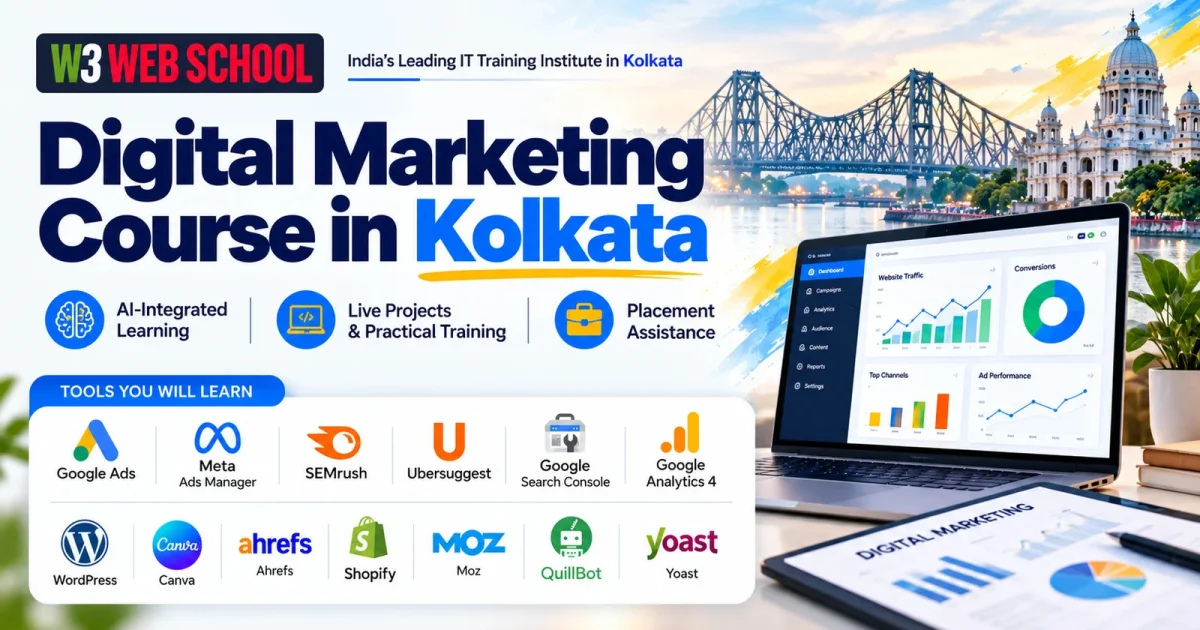
Digital marketing has become an important skill for businesses that want to reach customers online. From improving search engine visibility to running paid advertising campaigns, companies need people who understand how different digital channels work together.
For students, fresh graduates and working professionals, learning digital marketing can be a way to develop practical skills and explore new career opportunities. However, choosing the right training programme requires more than comparing course fees or looking at promotional claims.
If you are searching for a Digital Marketing Course in Kolkata, here are the important factors to consider before enrolling.
A good course should cover the major areas of digital marketing rather than focusing on just one or two topics.
Before enrolling, check whether the syllabus includes:
Search Engine Optimization (SEO): Keyword research, on-page optimization, technical SEO, link building and performance analysis.
Google Ads and PPC: Campaign planning, keyword targeting, ad groups, conversion tracking and budget management.
Social Media Marketing: Content planning, platform management, audience engagement and paid social campaigns.
Content Marketing: Content research, blog writing, content calendars and audience-focused communication.
Web Analytics: Website traffic analysis, conversion measurement and campaign reporting using analytics tools.
Website Management: WordPress fundamentals, landing pages and basic website optimization.
Email Marketing: Campaign planning, audience segmentation and performance measurement.
The right combination depends on your career goals. Someone interested in SEO may need deeper technical training, while someone aiming for a performance marketing role should pay close attention to advertising platforms and conversion tracking.
Knowing the definition of SEO is different from optimizing a website. Similarly, understanding advertising concepts does not automatically prepare someone to manage a real campaign.
Look for a programme that includes practical assignments, demonstrations and project work. These activities can help you understand how marketing decisions are made and how results are measured.
For example, a practical assignment might involve researching keywords for a local business, optimizing a website page, preparing a social media calendar or building a sample advertising campaign.
Ask the institute how practical work is evaluated and whether students receive feedback from trainers. This can help you understand how much hands-on learning the programme actually provides.
Digital marketers use different tools to research audiences, manage campaigns and measure performance.
Some commonly used platforms include:
Google Search Console for website search performance.
Google Analytics 4 for website and user behaviour analysis.
Google Ads for paid search and other advertising campaigns.
Meta Ads Manager for Facebook and Instagram advertising.
Google Keyword Planner for keyword research and advertising planning.
WordPress for website and content management.
SEO tools such as Ahrefs, Semrush and Rank Math for selected optimization tasks.
You do not need to master every platform at the beginning. Focus on understanding the tools relevant to your chosen specialization and practise using them wherever access is available.
AI-assisted tools can also support research, content planning and repetitive tasks. However, fact-checking, audience understanding and sound marketing judgment remain essential.
The quality of instruction can influence how effectively you learn a subject. Before choosing an institute, ask who will teach the classes, how doubts are resolved and whether students receive individual feedback on assignments.
You should also check the batch schedule, class format, course duration and availability of revision sessions.
If you prefer classroom learning, consider the institute's location and travel time. If you need more flexibility, ask whether live online classes are available.
These practical details can make a significant difference to your learning experience.
Students often choose digital marketing training because they want to prepare for professional opportunities.
Possible career paths include SEO executive, digital marketing executive, social media executive, PPC executive and content marketing associate. Responsibilities and entry requirements vary between employers.
Before enrolling, ask what career support actually includes. Resume guidance, portfolio development, mock interviews and job application assistance can be useful, but they are different from a guaranteed job offer.
Review any placement statistics carefully and check whether the institute explains how those figures are calculated. Your own results will also depend on your skills, practical experience, communication and interview preparation.
Course fees vary according to the syllabus, duration, teaching format, practical components and additional support provided.
Rather than selecting a programme based only on the lowest advertised price, compare what is included. Check the total fee, payment terms, learning materials, project access and any additional charges.
A clearly explained syllabus and realistic learning schedule can help you decide whether the programme fits your budget and professional goals.
W3 Web School is an IT and professional training institute based in Kolkata. Its digital marketing programme covers areas such as SEO, paid advertising, social media marketing, content marketing and analytics.
Learners interested in the programme can review the curriculum and available course information before contacting the institute to discuss the training format, duration, fees and batch availability.
You can explore the Digital Marketing Course in Kolkata at W3 Web School to learn more about the course.
Comparing the syllabus, practical learning approach and career support with your own requirements will help you make a more informed decision.
Yes. Beginners can start with the fundamentals of SEO, content marketing, social media and paid advertising. No advanced marketing experience is necessary to begin learning, although regular practice is important.
A comprehensive programme should cover relevant marketing channels, practical assignments, industry tools, analytics and opportunities to apply what you learn. The exact syllabus should match your career goals.
Yes. Graduates from different academic backgrounds can learn digital marketing. Employers may consider practical skills, relevant experience, communication and the requirements of the particular role.
Compare the syllabus, trainers, practical projects, course duration, fees, student feedback and career support. Ask for clear answers before paying the admission fee.
No course can automatically guarantee employment. Training can help you develop relevant skills, but hiring decisions depend on your abilities, experience, interview performance and employer requirements.
Choosing the right digital marketing programme starts with understanding what you want to learn and where you want to use those skills. A detailed syllabus, practical assignments, experienced trainers and transparent career guidance are useful factors to consider.
Take time to compare available programmes, ask questions and review the actual learning experience offered. With consistent practice and a willingness to keep learning, you can build a stronger foundation for exploring digital marketing opportunities.









Get free quotes from verified businesses near you.
Chat with Support
Comments